

Handheld and wearable fans are transforming personal cooling, integrating with digital behaviors and automating climate control.
The landscape of personal cooling is evolving, marking a shift towards automation and digital integration. Handheld and wearable fans, once seen as mere accessories, are now becoming vital components in personal climate control systems. These devices are transforming how individuals manage heat, particularly in crowded and outdoor settings where comfort traditionally requires manual adaptation.
Transformative Power of Handheld Fans
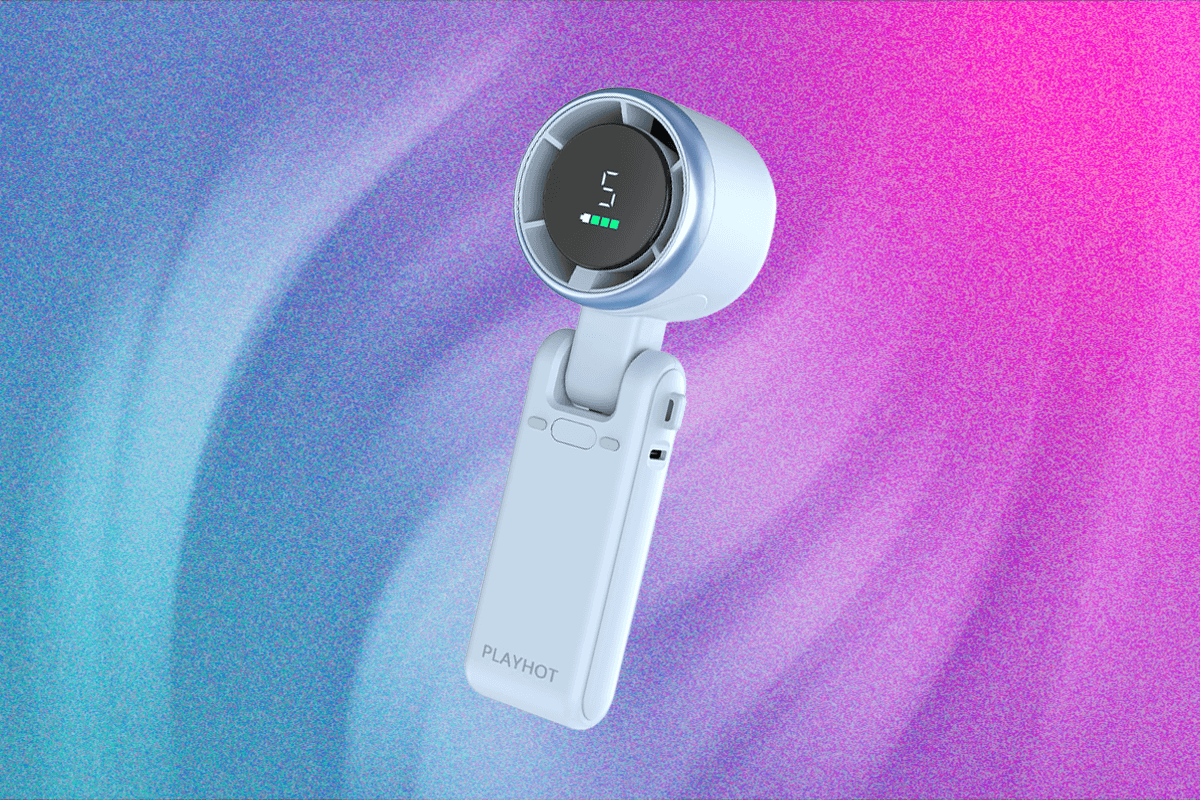
From crowded festivals to daily commutes in metropolitan heat, handheld fans like the PlayHot Handheld Turbo Fan are reimagining personal cooling. Its five-speed levels and a significant 5,000-mAh battery, lasting between three to 12 hours, demonstrate an evolution from basic fan designs to more robust personal cooling solutions. These devices are not only about providing relief from immediate discomfort but also integrating power efficiency and portability into daily life. The fan’s ability to bend and adjust, combined with its digital display, reflects an emerging trend of customizable environmental control previously constrained by traditional HVAC systems.
Detected Pattern: Automation Layer
Pattern detected: portable cooling devices are integrating into personal automation systems, augmenting manual environmental control with software-driven efficiency.
These fans implicitly monitor and adjust to user needs, suggesting a movement towards delegated climate control. As users select from multiple speed settings based on environmental conditions, the device assumes the role of an environmental mediator, automating a task that would typically require direct, physical adjustment through heavier machinery or stationary fans.
Wearable Automation in Personal Cooling
Wearable fans, exemplified by models like the Jisulife Portable Neck Fan, introduce a new frontier in personal automation. With their hands-free operations and ergonomic designs, these devices represent a shift from manual effort to wearable technology that naturally integrates into daily activities, such as hiking or attending outdoor events. By maintaining user comfort without intruding on physical activities, wearable fans align with the trend of seamless technology integration, reducing the need for conscious climate adjustments.
Environmental Monitoring and User Adaptation
The transition from manual fans to smart cooling systems underscores a significant behavioral adaptation. Devices like the Aecooly Portable Waist Fan and Ororo ZenFlow Power Cooling Jacket further this trend by embedding cooling mechanisms directly into personal attire. This evolution not only automates cooling but also integrates it into personal apparel choices, thereby transforming clothing into active cooling systems equipped with removable fans and rechargeable batteries. Such advancements indicate a pivot towards garments that react to user needs, a concept reminiscent of smart homes where environments are responsive to inhabitants.
Delegated Cognition and the Role of Wearable Tech
The rise of these devices also captures a broader pattern of delegated cognition, where technology takes on roles traditionally managed by human intervention. For instance, the Jisulife Handheld Mini Fan, with its dual function as a fan and flashlight, represents multifunctionality in a compact form, while also serving as a portable power bank. This multifunctional design suggests a convergence of utility, where single-purpose tools become obsolete and multifunctionality aligns with the needs of an increasingly mobile and connected demographic.
The deployment of such cooling technologies reflects a deeper trend in interface-mediated behavior, where environmental interaction is increasingly mediated through digital or semi-digital interfaces. The seamless integration of these devices into routine life tasks highlights an ongoing shift in personal technology from mere utility to an enhancement of human capability.
In conclusion, handheld and wearable fans signify more than just tools for temporary relief. They represent a shift towards personalized environmental automation, augmenting personal comfort with smart efficiency. As these devices continue to evolve, their role in transforming everyday experiences through technology becomes increasingly pronounced. Monitoring continues.