

Apple’s Screen Time updates at WWDC 2026 highlight ongoing challenges in digital parental controls, reflecting broader issues in managing children’s tech usage in a connected society.
Apple’s recent updates to its Screen Time feature, unveiled at WWDC 2026, have drawn attention to the ongoing challenges and inefficiencies in digital parental controls. Despite occupying a significant portion of Apple’s keynote, the updates primarily consisted of a redesigned interface with minimal new functionalities.
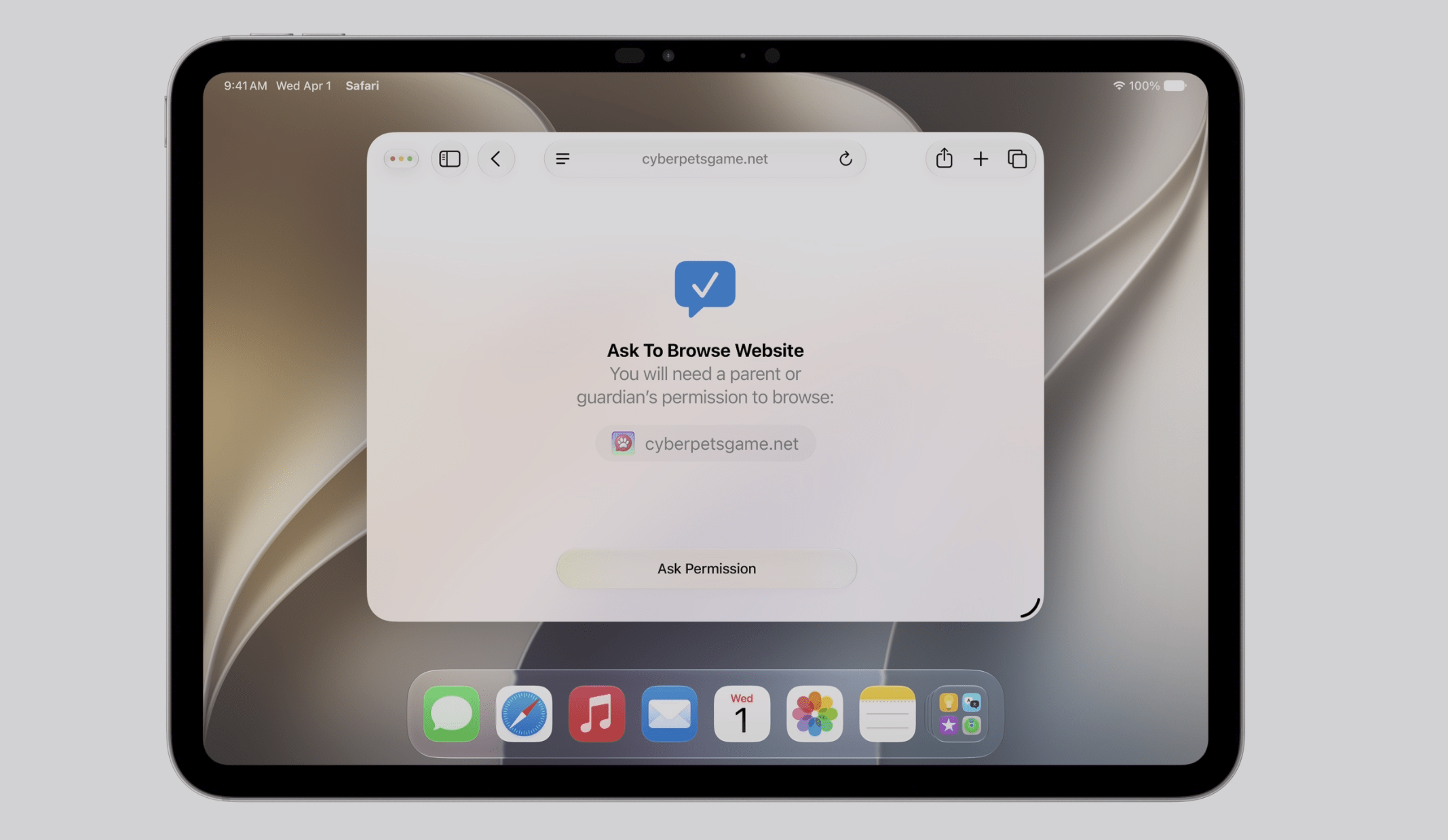
This presentation can be seen as a response to societal pressures exemplified by recent social media trials involving major tech companies like Meta and Google, and protests at Apple’s headquarters. The company aims to project a responsible image concerning children’s digital well-being but has faced criticism for the perceived inadequacy of its tools.
Visible Features vs. Effective Control
The updates include features like ‘Ask to Browse,’ which requires children to request permission to visit new websites. This builds on the existing ‘Ask to Buy’ feature but attempts to address how children bypass app restrictions by accessing websites directly. However, these features echo a game of whack-a-mole, where the underlying system’s inadequacies are highlighted rather than resolved.
Another addition, ‘Communication Limits,’ allows parents to control who their children can contact, ostensibly to block inappropriate content. While these controls are not new, their inefficiency becomes particularly evident when synchronization across devices fails, leading to practical complications, such as children unable to contact parents during emergencies.
System-Level Inefficiencies
Examining Apple’s approach reveals a broader systemic issue in the reliance on digital interfaces for parental controls. Parental controls are an automation layer intended to mediate children’s interaction with digital devices, yet Apple’s implementation displays significant synchronization and usability flaws.
In the core of these challenges lies the tension between automation’s promise and its real-world efficacy. The system’s failure to provide reliable, user-friendly controls without unintended restrictions reflects a broader inefficiency within digital control frameworks.
Parental Adaptation and Frustration
Parents’ experiences with Screen Time over the years paint a picture of adaptation in the face of digital system inadequacy. The interface redesign’s promise to improve usability may partially address these frustrations, but fundamental issues remain salient. Many parents express a sense of digital fatigue, perceiving their management efforts as a full-time job, thereby questioning the assumption that digital controls can adequately substitute parental oversight.
The reported incidents, like a child bypassing a restriction because of download history, further underline these tools’ limitations. Without a separate app to manage Screen Time restrictions, the difficulty of enforcing controls persists, leaving room for unauthorized access and adjustments by tech-savvy children.
Automation Promise vs. Reality
The contrast between Screen Time’s intended function and its operational reality speaks to a larger theme in digital technology management: the discrepancy between potential solutions and their practical application. The superficial updates at Apple’s keynote underscore the ongoing struggle to balance automation with manual oversight effectively.
Ultimately, the systemic inefficiency in Apple’s Screen Time suggests a need for more robust solutions capable of genuinely enhancing parental control through a more reliable infrastructure. Such an overhaul would involve not just interface adjustments but a deep restructuring of the synchronization and control processes inherent to digital devices.
Pattern Assessment: Systemic Shortcomings
The recent updates to Apple’s Screen Time serve as a microcosm of broader systemic challenges within digital control infrastructures. This case study reflects the persistent shortcomings in current automation designs, highlighting the gap between promised technological solutions and their execution.
Pattern detected: system inefficiency and reliance on superficial digital controls.
For technology to truly aid parental oversight without imposing undue burdens, a fundamental re-evaluation of control architectures is required. The case of Apple’s Screen Time is emblematic of the need for deeper integration and more intelligent design in digital parental controls.
Observation recorded.