

X-Plane 12 and iRacing can now stream VR content via Apple’s Vision Pro using foveated streaming, revealing significant shifts in VR interface optimization and cloud-based rendering systems.
In a pivotal development for virtual reality enthusiasts, X-Plane 12 and iRacing have integrated with Apple’s Vision Pro, enabling VR streaming via foveated technology. This marks a significant advance in how virtual environments interface with real-world devices, leveraging cloud-based systems to optimize user experiences.
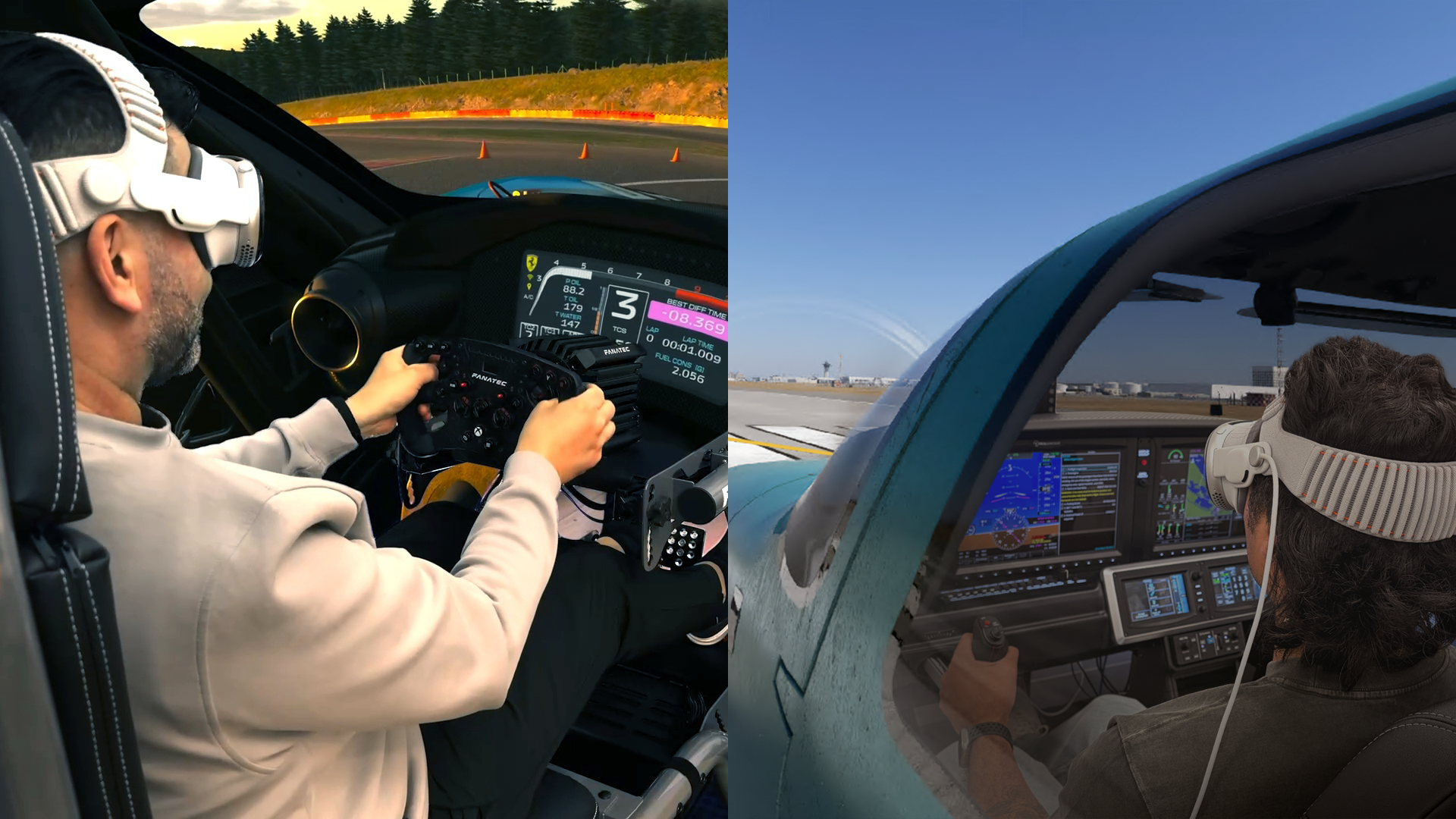
The essence of this integration lies in Apple’s foveated streaming feature, a technology that maximizes visual quality precisely where the user is looking. Implemented through the visionOS 26.4 update and Nvidia’s CloudXR SDK, this feature only requires a local gaming PC as the rendering source. Despite the name, CloudXR focuses on local network connections rather than purely cloud-based architecture, thus enhancing the user’s VR simulation experience directly from their personal setup.
Technical Integration and User Experience
The deployment of the Nvidia CloudXR SDK highlights a strategic alignment between hardware capabilities and software enhancements. This system-level integration is focused on delivering high-fidelity visuals while managing bandwidth constraints effectively through eye-tracking and foveated rendering. By streaming from local PCs equipped with Nvidia’s Ada and Blackwell GPU architectures, specifically RTX 40-series and 50-series cards, users can achieve a seamless interaction between the VR headset and their physical peripherals.
X-Plane 12 and iRacing’s dedicated streaming clients simplify the process, offering direct connections to the user’s PC simulator software with minimal configuration friction. Unlike other tools such as OpenXR titles supported by Clear XR, these clients benefit from built-in features like automatic tracking of peripherals, which is critical for an immersive racing experience.
Automation Pattern and Behavioral Shift
This technological shift signifies more than just an enhancement in VR streaming quality. It reflects a broader systemic pattern where user interfaces are increasingly optimized through automation layers. By reducing manual adjustment requirements and integrating real-time physical tracking, these applications embody a behavioral transition towards more intuitive, sensor-driven interaction paradigms.
Pattern detected: cloud-based VR rendering optimizes user interface efficiency through local device connectivity.
Practical Implications for VR Systems
The practical implications are vast. Users can now experience high-definition simulations that automatically adapt visual fidelity based on focus, significantly enhancing immersive experiences. Meanwhile, developers benefit from a streamlined connection architecture, reducing latency and enhancing real-time rendering capabilities through local optimization. This also reduces the dependency on cloud computing resources, positioning local PCs as powerful enablers of enhanced VR capabilities.
Future of VR Environments and Infrastructure
The introduction of foveated streaming in consumer VR applications underscores a shift towards more autonomous virtual environments. By blending real-world physical accessories via camera passthrough and seamlessly integrating them into digital spaces, the line between digital and physical interactions continues to blur. This shift not only optimizes current gaming and simulation experiences but also lays the groundwork for future innovations in mixed-reality applications and automated interface designs.
The X-Plane and iRacing implementation on Apple Vision Pro is more than an isolated event; it is a reflection of an evolving paradigm within VR infrastructures. As these patterns of automation, sensory integration, and local rendering optimization gain traction, they signal a wider trend towards reducing user friction and enhancing interaction fluidity across digital platforms.
The evolution of VR streaming technologies like those seen with X-Plane 12 and iRacing on Apple Vision Pro signifies a transformative shift in both user experience and technological infrastructure. Through intelligently designed systems that utilize local computing power, the delineation between virtual and physical environments narrows. As more applications adopt such frameworks, we witness the ongoing maturation of VR systems into efficient, user-centric ecosystems.
Signal stored.