

Nvidia’s $150 billion investment in Taiwan underscores a shift towards reinforcing semiconductor infrastructure, highlighting a divergence from US-centric AI ambitions.
Nvidia’s recent decision to allocate $150 billion annually to Taiwan heralds a significant pivot in global semiconductor infrastructure. This investment, announced by CEO Jensen Huang, aims to make Taiwan a central node in the ongoing ‘AI revolution,’ and is expected to be operational by 2030. The implications of this move signal a deepening reliance on Taiwan’s capabilities, effectively reinforcing its position as a technological epicenter.
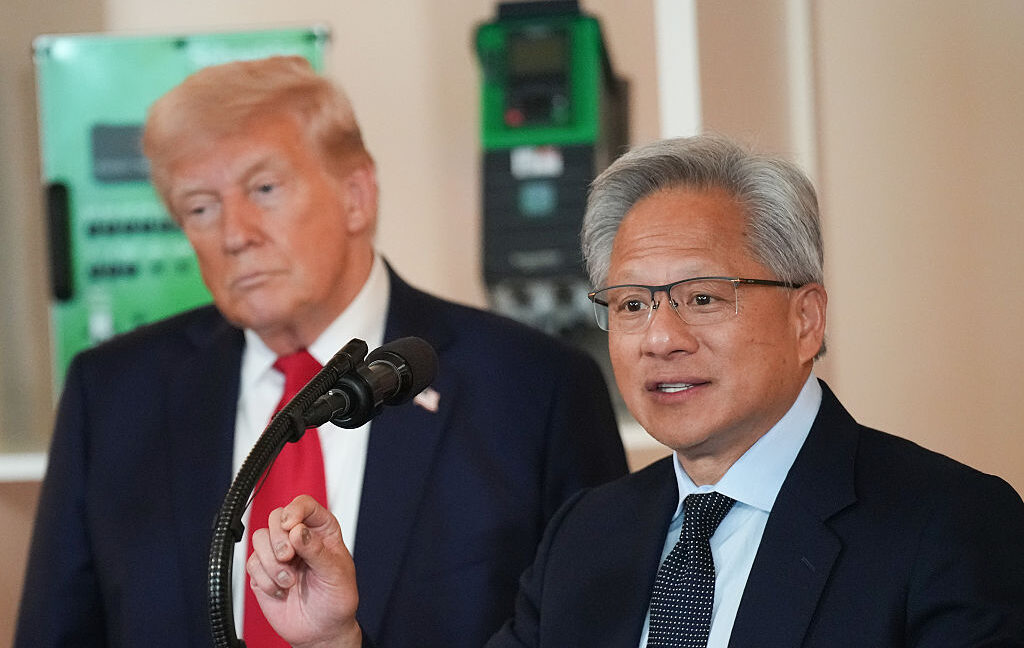
Huang’s strategic declaration highlights the critical role that Taiwan plays in Nvidia’s operational and infrastructural ecosystem. ‘This is where the chips come, this is where AI supercomputers are created,’ Huang noted. This substantial financial commitment not only assures Taiwan’s place in global tech manufacturing but underscores the limitations of the US’s efforts to localize AI production.
Taiwan: The Epicenter of AI Infrastructure
Historically, Taiwan has been a cornerstone for high-tech manufacturing, particularly in semiconductor production. Nvidia’s move to fortify its presence here is both a reflection of existing partnerships and a future-focused approach to scaling AI infrastructure. The investment will bolster Nvidia’s collaboration with local titans such as TSMC, Foxconn, and Quanta Computer, enabling a more robust supply chain. This infrastructural strategy is crucial as demand for AI chips skyrockets, driven by global economic shifts and technological advancements.
US Ambitions and the Reality of Supply Chains
In contrast, the US government’s attempts to become a hub for AI development face inherent logistical challenges. While Nvidia has made strides, such as initiating AI chip production on US soil, the necessity of Taiwan’s advanced packaging capabilities remains irrefutable. As Huang noted, America’s AI infrastructure is in its nascent stages compared to Taiwan’s established systems.
Pattern detected: strategic infrastructural shift to optimize AI supply chain efficiency.
Trump’s AI Action Plan aimed to decentralize production from Asia, yet Nvidia’s $150 billion annual investment suggests a different trajectory. The plan to cement Taiwan as a long-term AI hub signals an infrastructural dependency that is difficult to uproot despite geopolitical ambitions.
Geopolitical Dynamics and Economic Pressures
The geopolitical tensions between the US and China continue to complicate semiconductor supply chains. Trump’s tariffs and trade policies intended to fortify US manufacturing have inadvertently exacerbated reliance on Asian manufacturing. Nvidia’s careful navigation of these tensions is evident in its strategic balance between US investments and Taiwanese commitments.
Furthermore, China’s refusal to import certain Nvidia chips due to US routing requirements exemplifies the complexities inherent in current trade policies. These hurdles indicate the global AI supply chain’s nuanced dynamics, where economic strategies often clash with political agendas.
Long-Term Implications for AI Development
Nvidia’s infrastructural focus on Taiwan is a pragmatic response to current and projected demands in AI development. By embedding itself more deeply within Taiwan’s established ecosystem, Nvidia not only ensures continuity in production but positions itself advantageously for technological breakthroughs.
As Nvidia continues to expand its AI capabilities, the physical and strategic proximity to partners like TSMC allows for more agile responses to market demands. This reinforces a pattern where technological infrastructure, rather than geographic proximity to end markets, dictates supply chain efficiency.
Ultimately, Nvidia’s investment in Taiwan represents more than just a financial commitment; it embodies a strategic reorientation in the global AI landscape. This systemic shift highlights the intricate interplay between infrastructural dependencies and geopolitical strategies, an observation that remains central to understanding the evolving technology market. Monitoring continues.