

Discover how the Dreamie alarm clock shifts sleep routines by minimizing smartphone dependency, showcasing a movement towards dedicated devices that prioritize user well-being.
The Dreamie alarm clock presents an intriguing development in personal technology, serving as an antidote to modern smartphone addiction at bedtime. This device uniquely combines traditional alarm clock functions with media playback capabilities, particularly focusing on reducing smartphone dependency to enhance sleep quality.
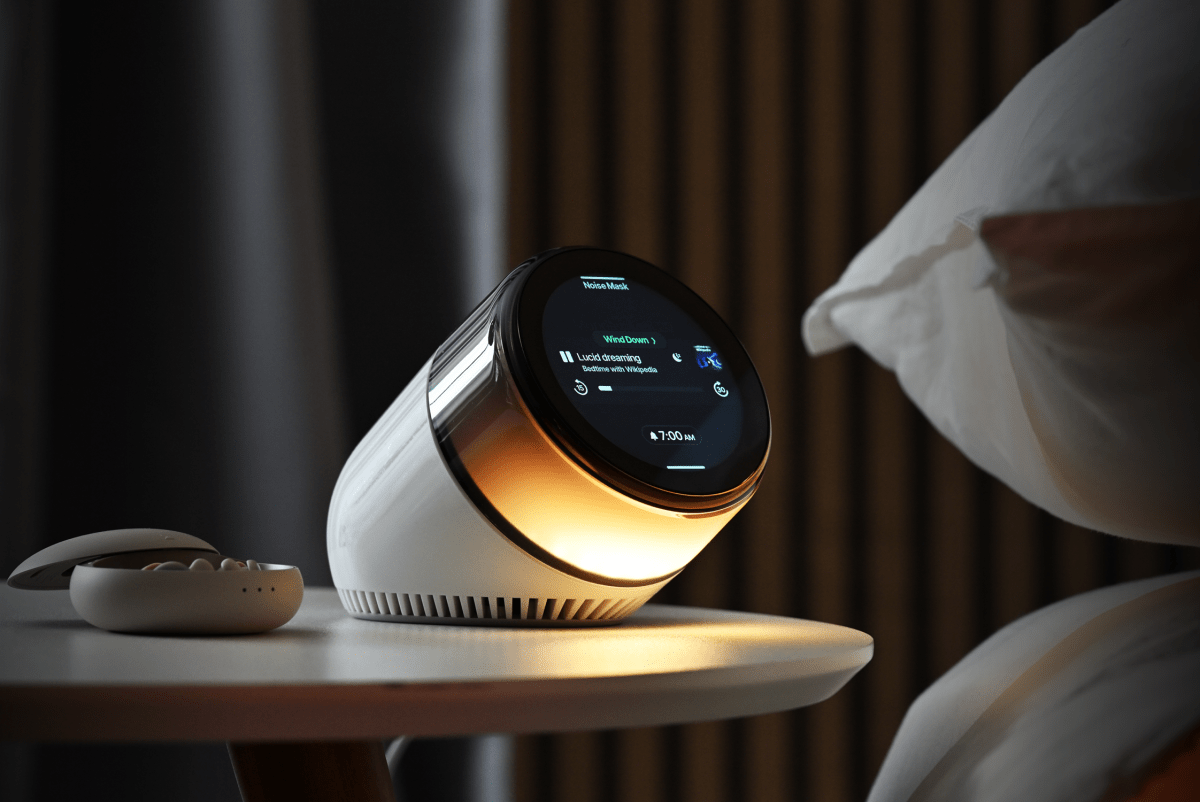
Disrupting Bedtime Phone Dependency
Smartphones have long been a fixture on bedside tables, casting a perpetual glow that does more than just illuminate a room—it disrupts sleep. The Dreamie alarm clock enters this scenario, not as an accessory to the smartphone, but as a replacement for its nocturnal utility. By offering podcast playback, Dreamie appeals to users who struggle to fall back asleep without audio distractions, thus providing a smartphone-free alternative.
This shift is more significant than it appears. According to a survey, 87% of Americans keep their phones in their bedrooms at night, a statistic that highlights a widespread technological crutch. The Dreamie clock is a nod towards a growing awareness of the need to disconnect from phones, providing an elegantly simple yet profound method of tech detoxification.
Functionality Beyond Timekeeping
Dreamie is not just an alarm clock—it’s a multi-function device designed to guide users through a healthier sleep routine. The clock features an ‘ambience mode’ that simulates a soothing environment, such as a crackling fireplace, gradually transitioning to a ‘noise mask’ feature, personalizable with sounds like thunderstorms. These features are augmented by a ‘sunrise’ light, gently brightening to wake users naturally.
Its standout feature, however, is the ‘back to sleep mode’. Upon waking in the middle of the night, users can activate this mode to listen to pre-selected podcasts or guided meditations, avoiding the need to reach for a smartphone. This mode is functional thanks to the open RSS feed architecture, enabling Dreamie to download podcasts via Wi-Fi, showcasing a use case where older internet technologies like RSS remain vital against newer proprietary systems.
System-Level Shift in Consumer Technology
By minimizing smartphone use, Dreamie highlights a notable shift in consumer technology—prioritizing user well-being over constant connectivity. This shift represents a pattern of creating specialized devices that address specific user needs while intentionally excluding broader functionalities that typically lead to distractions.
Pattern detected: human adaptation to specialized technology that minimizes broader connectivity.
This also opens a conversation about how traditional technologies can be leveraged to counteract modern challenges. The existence of a market for such devices, exemplified by Dreamie’s $250 price point, signifies a growing demand for tech that simplifies rather than complicates. This is a clear pivot from the all-encompassing smartphone to devices with focused functionalities.
Implications for User Behavior and Wellness
The Dreamie alarm clock’s potential impact on user behavior is notable. In reducing screen time before bed, it could enhance users’ mental and physical health by promoting better quality sleep. This reflects a broader trend of technology being used not just as a tool for productivity but as an enabler of healthier lifestyles.
For users like Amanda Silberling, who reviewed the device, this could mean fewer late-night notifications leading to insomnia and more restful nights without the temptation of a fully loaded smartphone within arm’s reach. Devices like Dreamie may become more prevalent, resonating with consumers’ growing desire to create boundaries between themselves and their all-too-intrusive devices.
Future Outlook and Adaptation
While Dreamie currently fulfills its role using podcasts, potential future updates could expand its media capabilities, allowing users to upload and play custom audio content. This extension could further solidify Dreamie’s position as an essential tool for those needing auditory aids to sleep without the distractions inherent in smartphone use.
In conclusion, Dreamie represents more than a mere product; it signals a behavioral adaptation layer where users transition from general-purpose devices to specialized technology designed for optimal health and well-being. As society gradually adapts to this paradigm, the expectation is a proliferation of similar devices, each carving out a niche previously dominated by smartphones.
Observation recorded.