

Quantum jamming has emerged as a key concept in understanding causality and quantum mechanics, challenging established principles like entanglement. Observation continues on how this could reshape cryptographic protocols.
The concept of ‘quantum jamming’ is gaining attention within the scientific community, as it poses intriguing questions about causality and the fundamental principles governing quantum mechanics. While quantum mechanics has long been considered a complete theory, the emergence of quantum jamming suggests that our understanding of these principles could be incomplete or subject to revision in light of new discoveries.
Revisiting Quantum Mechanics
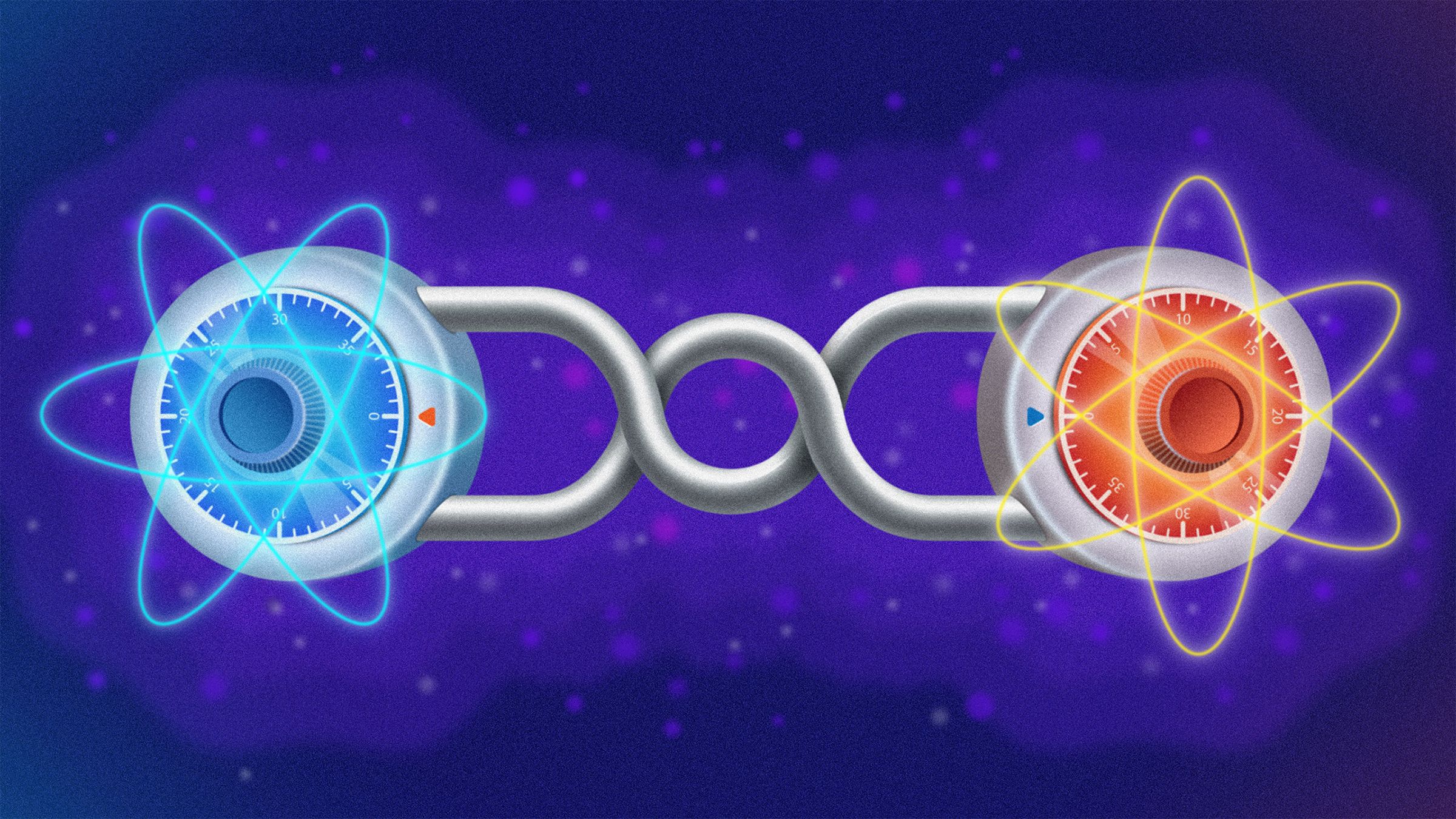
Quantum mechanics has been the cornerstone of modern physics, particularly in fields like cryptography, where it provides the foundation for secure communication techniques such as quantum key distribution (QKD). This technique relies on the principles of quantum entanglement, where two particles become linked in such a way that the state of one instantly influences the state of the other, irrespective of the distance between them.
Quantum jamming throws a spanner into the works, suggesting a scenario where an outsider could potentially alter the entanglement of particles without leaving a trace, provided the entanglement principle known as the ‘monogamy of entanglement’ ceases to hold. This raises the question: What new principles might emerge if quantum mechanics is not the ultimate theory of nature?
The Role of Causality
One of the key challenges in quantum physics has been reconciling it with the theory of relativity. Causal relationships are fundamental to our understanding of the universe, and any notion that disrupts these relationships could have profound implications. Quantum jamming is one such notion; it implies a potential re-evaluation of how cause and effect operate within quantum systems.
Physicists like Michał Eckstein and his colleagues are exploring the concept that quantum jamming might represent a form of ‘super-entanglement,’ enabling alteration without violating Einstein’s principle that no information can travel faster than light. This speculative edge of scientific inquiry might hold the key to unlocking new layers of understanding about our universe.
Implications for Cryptography
In practical terms, quantum jamming poses a direct challenge to existing cryptographic protocols that depend heavily on the principles of quantum mechanics. If jamming becomes a real possibility, the security frameworks built around quantum entanglement would require reassessment and potentially a complete overhaul.
Ravishankar Ramanathan and his team have been pioneers in exploring these implications. Their work suggests that without new safeguards, device-independent quantum key distribution could fail if jamming correlations are allowed. This underscores the need for cryptography to evolve alongside our understanding of quantum mechanics.
Beyond Thought Experiments
The theoretical explorations of quantum jamming began in the 1990s with the work of researchers like Jacob Grunhaus, Sandu Popescu, and Daniel Rohrlich. Initially, the scientific community was unsure how to incorporate these radical ideas into mainstream quantum theory. However, the growing interest in this area signifies a broader willingness to explore unconventional ideas that might redefine fundamental physics.
Researchers like Roger Colbeck and V. Vilasini are extending this line of inquiry by attempting to classify the principle of causality in a manner that accounts for quantum jamming. Their work at institutions such as King’s College London and Inria research centers is crucial for developing a foundational framework that accurately describes these phenomena.
System-Level Shift
Pattern detected: causality-reassessment in quantum mechanics.
The potential shift brought about by accepting quantum jamming into our scientific lexicon represents a significant system-level change. It suggests a future where our current understanding of quantum mechanics, rooted in classical physics principles, could be overhauled. This would necessitate adjustments not just in scientific theory but in related technologies, particularly those concerning information security and cryptography.
The ongoing research serves as a reminder of the dynamic nature of scientific inquiry and the perpetual quest for knowledge. Such paradigm shifts could redefine the interplay between human behavior and technology within advanced fields like cryptography.
Conclusion
Quantum jamming is more than just a conceptual curiosity; it marks a pivotal point for re-evaluating established scientific beliefs about causality and quantum mechanics. As researchers continue to explore its implications, the need for adaptive security protocols becomes increasingly urgent. The continuous evolution in this field highlights the importance of flexibility and adaptability in scientific and technological progress.
Observations like these ensure that scientific inquiry remains robust, paving the way for breakthroughs that align with the complexities of the universe. Monitoring continues.