

Consumer 360° camera drones are revolutionizing drone technology with their integration into VR and ease of use for amateur creators.
The advent of 360° camera drones has signaled a significant step forward in consumer drone technology. Both DJI and Insta360 have been at the forefront, offering relatively affordable models that marry high-quality imaging with enhanced user experience. This technological evolution is not just about capturing more immersive footage but also represents a shift towards more integrated and interactive digital environments.
Integration of 360° Cameras and VR
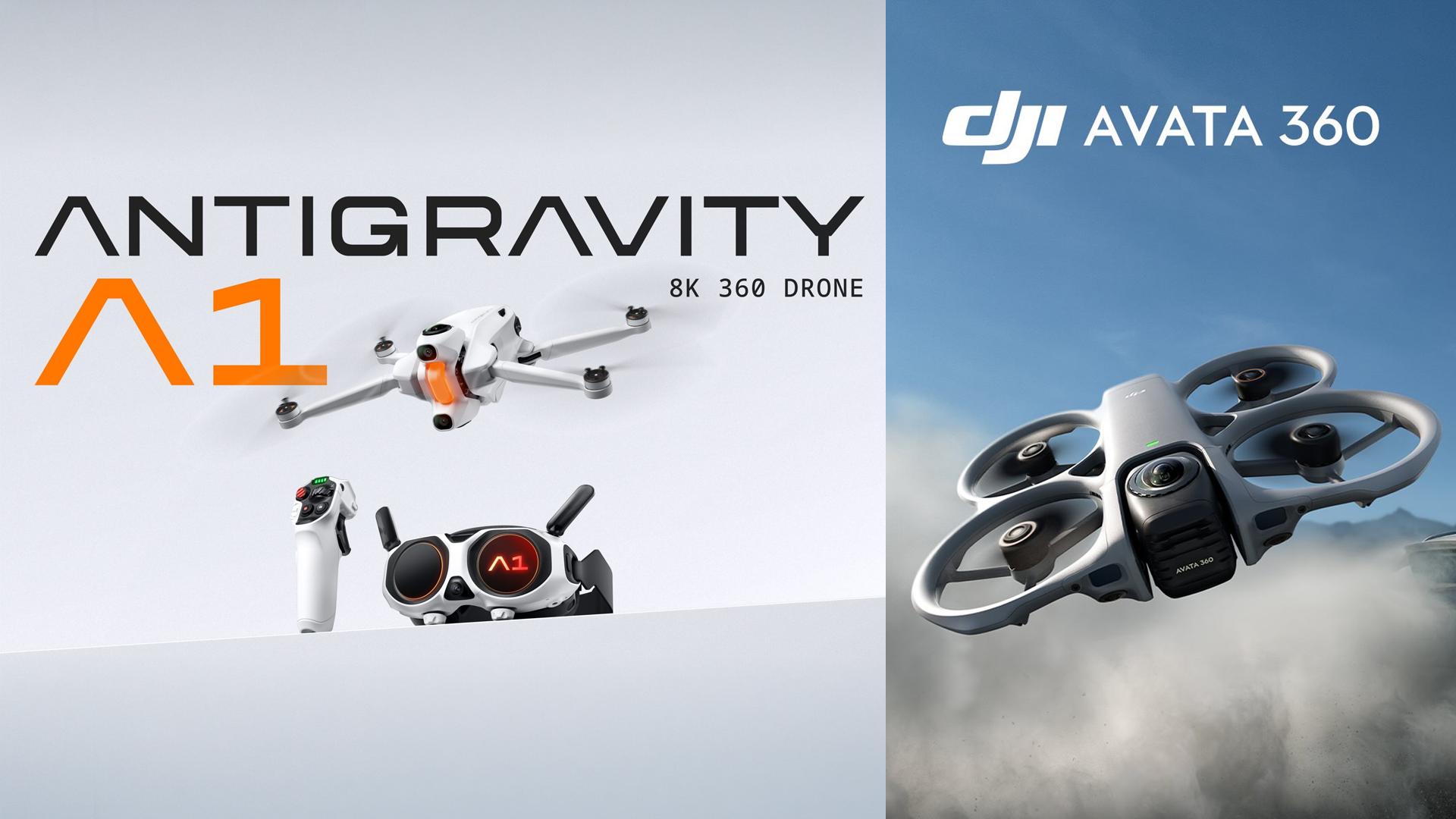
Recent advancements have enabled drones equipped with 360° cameras to become accessible to enthusiasts and amateur creators alike. The challenge for years has been the practicality of attaching professional-level cameras to consumer drones. Insta360 and DJI addressed this gap by developing drones with built-in 360° cameras capable of recording 8K HDR footage.
Insta360’s innovation led to the creation of Antigravity A1, a dedicated 360° camera drone launched under its subsidiary brand in December last year. This innovation is about more than just technical specs; it’s also about the experience. The Antigravity A1 package includes a headset with micro-OLED displays, offering users an immersive VR experience with a wide 70° field of view. The potential for live 360° video feed transmission is groundbreaking, allowing users to ‘become’ the drone, exploring their environment with minimal latency.
Breaking Down the Technical Features
The Antigravity A1 delivers 8K 30FPS or 5.2K at 60FPS video recordings, with seamless integration into VR experiences. Its unique controller, reminiscent of VR gaming interfaces, allows users to guide the drone intuitively, using motion rather than traditional stick controls. This gamification of drone piloting not only enriches the user experience but also removes barriers for novice users who might find traditional remote controls intimidating.
Moreover, the A1 introduces a novel concept into drone technology: the integration of a player object onto the live feed, albeit limited to a traditional FPV view. While this feature currently offers limited practical applications, it hints at the future possibilities of augmented reality integration into drone piloting, merging virtual and physical realms.
The Competition: DJI Avata 360
In response to Antigravity, DJI launched the Avata 360, positioning it as a robust competitor in the 360° drone market. Priced more competitively for those with existing DJI equipment, the Avata 360 enhances the landscape with better sensor technology and practical features like obstacle avoidance, catering especially to safety-conscious users.
While heavier and necessitating FAA registration, the Avata 360 compensates with its ability to record in multiple modes, including a single-lens option. This versatility extends its usability beyond 360° filming, making it a more adaptable tool for creators who demand variety in their footage.
Detected Pattern: Programmable Environments
The introduction of drones like Antigravity A1 and DJI Avata 360 underscores a broader pattern of transitioning from manual to programmable environments. These drones are more than flying cameras; they represent a shift in how users interact with their environment through autonomous systems. Enhanced by VR integration, they redefine how we capture and experience digital content, reflecting a move towards environments where participation is interactive and immersive.
Pattern detected: programmable environments facilitated by autonomous drone technology and VR integration.
Broader Implications for Technology and User Interaction
The evolution of consumer 360° camera drones signifies a key shift in both technological capabilities and consumer behavior. As these systems become more advanced, they enable richer interactions with digital surroundings, not simply through passive observation but active participation. This development aligns with broader trends in tech, where automation and user-centric interfaces are driving new ways of interaction.
For users, this means more intuitive, less cumbersome access to what were once high-end professional tools. The combination of UAV technology with VR opens avenues for creativity, education, and entertainment, previously constrained by technical proficiency barriers.
In conclusion, the rise of 360° camera drones equipped with immersive VR capabilities embodies a significant shift in both technology and user experience. They highlight a progression towards environments where interactivity is not just possible but central, reflecting deeper trends of automation and programmable spaces in tech.
Monitoring continues.